Maasai Culture in Tanzania: Traditions, Lifestyle, History & the People Behind One of Africa’s Most Iconic Cultures
Maasai culture in Tanzania is one of the most distinctive and fascinating cultural traditions in East Africa. Known around the world for their colorful clothing, intricate beadwork, traditional dances, pastoral lifestyle, and strong connection to cattle and the land, the Maasai have preserved a remarkable cultural identity while adapting to the changing world around them.
For travelers visiting Tanzania, meeting the Maasai can offer something that a traditional wildlife safari cannot: an opportunity to understand the people, traditions, beliefs, and everyday life that form an important part of northern Tanzania’s cultural landscape.
But the Maasai are not a performance or an attraction created for tourists. They are a living community with their own history, social systems, values, responsibilities, challenges, and aspirations.
This guide explores the history, traditions, clothing, cattle culture, family life, ceremonies, traditional homes, beadwork, food, social structure, and modern life of the Maasai people in Tanzania—and explains how travelers can experience Maasai culture respectfully.
Who Are the Maasai?
The Maasai are a pastoralist people found primarily in northern Tanzania and southern Kenya. In Tanzania, Maasai communities are particularly associated with areas around Arusha, Monduli, Longido, Ngorongoro, Tarangire, Lake Natron, and West Kilimanjaro.
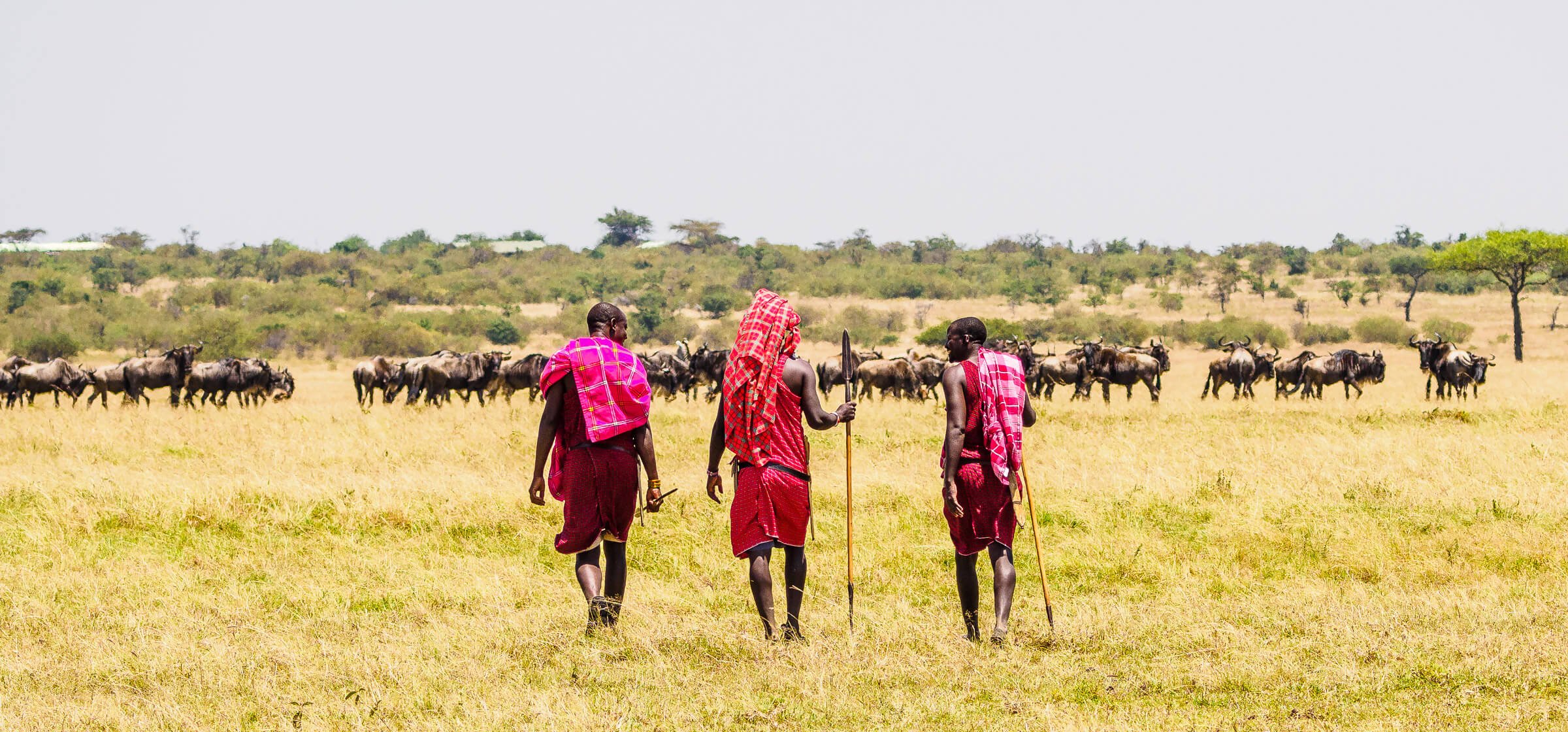
Their traditional way of life has historically revolved around livestock, especially cattle. Cattle are far more than an economic resource. They are deeply connected to Maasai identity, social relationships, ceremonies, food, wealth, and spiritual beliefs.
According to the Ngorongoro-Lengai Geopark, Maasai cultural beliefs traditionally hold that Enkai (or Engai), the creator, gave cattle to the Maasai, making cattle central to their relationship with the spiritual world.
This connection between people, livestock, land, and spirituality helps explain why cattle occupy such an important position in Maasai society.
A Brief History of the Maasai in Tanzania
The history of the Maasai is closely connected to the wider history of pastoral communities in East Africa.
The Maasai traditionally moved with their livestock in search of suitable grazing areas and water. Rather than depending primarily on permanent agriculture, pastoralism allowed communities to adapt to the seasonal environment of northern Tanzania.
Over generations, Maasai communities developed sophisticated knowledge of:
- Seasonal grazing patterns
- Water sources
- Livestock management
- Local plants
- Weather conditions
- Wildlife
- Land and environmental conditions
This knowledge was traditionally passed from one generation to another through observation, storytelling, songs, ceremonies, and everyday participation in community life.
Today, Maasai life is changing. Education, modern healthcare, technology, changing land-use patterns, markets, conservation, and tourism have all influenced Maasai communities.
However, cultural identity remains important, and many traditions continue alongside modern education and economic activities.
The Importance of Cattle in Maasai Culture
If there is one thing that helps explain Maasai culture, it is cattle.
Cattle have traditionally played several roles within Maasai society. They provide food and represent wealth, social status, family connections, and cultural identity.
Milk is particularly important in traditional pastoral life, while livestock can also be exchanged during important social occasions and family arrangements.
Cattle can also strengthen relationships between families and communities.
For the Maasai, therefore, livestock are not simply animals kept for commercial purposes. They are deeply integrated into social and cultural life.
This is one reason why visiting a Maasai community can be so different from visiting an ordinary village. You are seeing a way of life in which humans and livestock have historically depended on one another.
The Maasai Manyatta: Understanding the Traditional Home
A traditional Maasai homestead is often referred to as a boma or enkang.
A Maasai homestead traditionally consists of several small houses arranged within an enclosed area, with livestock kept close to the family.
Traditional houses are generally constructed using locally available materials. Women have historically played an important role in constructing and maintaining the homes.
The structure of the homestead reflects an important Maasai principle: community and family are closely connected.
A traditional homestead is not simply a collection of houses. It can represent a social space where families live, children learn, livestock are cared for, and cultural knowledge is passed between generations.
Maasai Clothing: Why Do Maasai Wear Red?
One of the first things travelers notice about the Maasai is their distinctive clothing.
The colorful cloth commonly associated with Maasai communities is known as a shuka.
Red is particularly associated with Maasai identity, although Maasai clothing today includes many different colors and patterns. The Ngorongoro-Lengai Geopark notes that clothing can vary according to factors such as age, gender, and location.
It is also important to understand that not every aspect of today’s clothing is thousands of years old. Modern commercial textiles have become part of Maasai dress, replacing some traditional materials that were used historically.
This is a good example of how Maasai culture has both continuity and change.
Maasai Beadwork: More Than Decoration
Maasai beadwork is another highly recognizable part of the culture.
Colorful necklaces, bracelets, earrings, belts, and other ornaments are often handmade and can carry social and cultural meanings.
Beadwork has traditionally been an important area of women’s craftsmanship and can also provide an economic opportunity through the sale of handmade products.
The knowledge of creating culturally significant objects is passed between generations, making beadwork an important part of cultural continuity. The Pitt Rivers Museum documents Maasai knowledge surrounding ceremonial clothing, beadwork, calabashes, cowbells, games, and other aspects of traditional life.
For travelers purchasing Maasai crafts, buying directly from community members or trusted local cooperatives can help ensure that the economic benefits reach the people producing the work.
Maasai Dance and the Famous Jumping Tradition
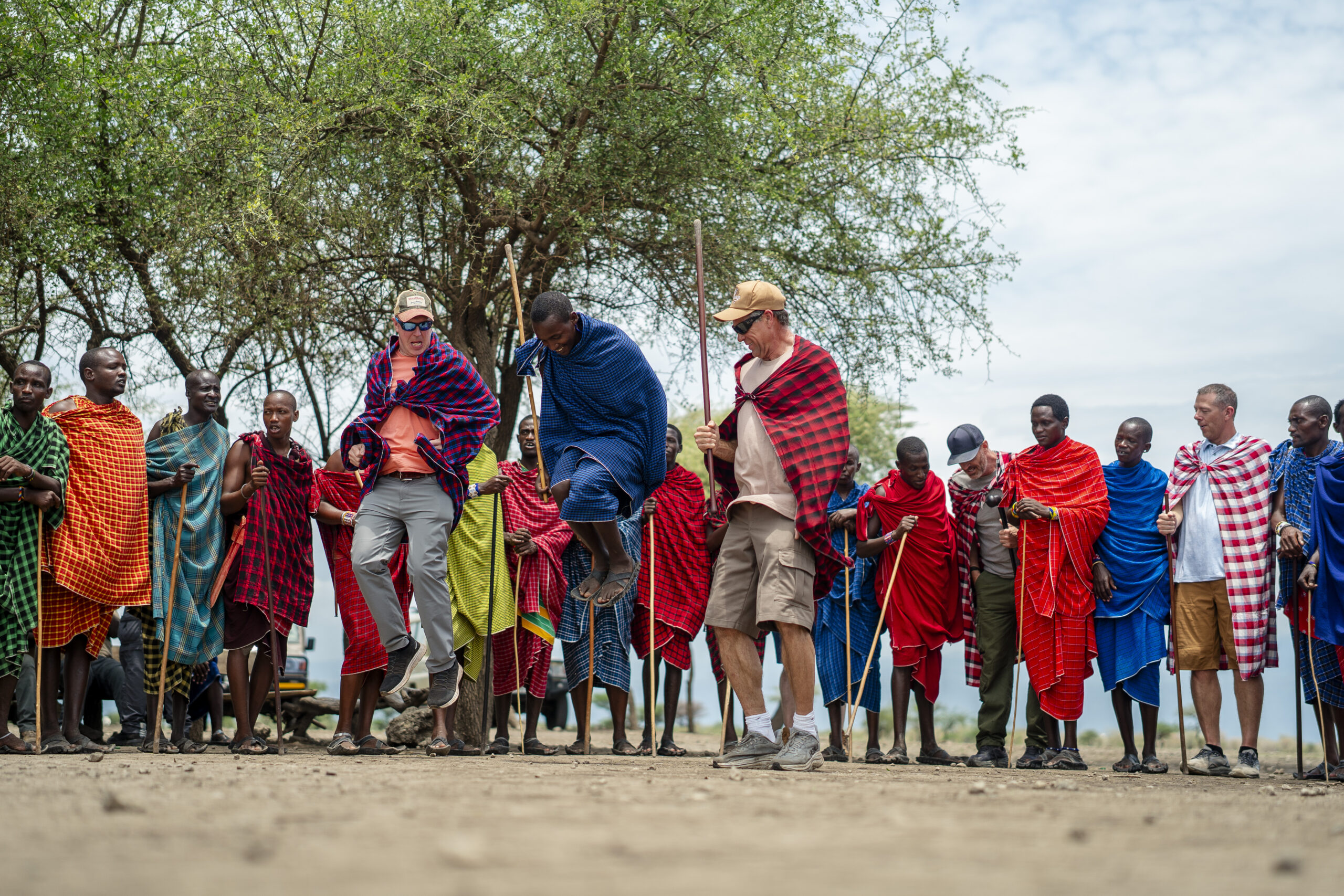
Maasai songs and dances are an important part of community life and ceremonies.
One of the most internationally recognized traditions is the jumping dance commonly associated with Maasai warriors.
The dance is not simply entertainment. Traditional songs, dances, and performances can carry cultural meanings and help transmit knowledge and identity between generations.
For visitors, witnessing a cultural performance can be memorable, but it is important to remember that these traditions belong to the community rather than being created solely for tourists.
A responsible cultural experience allows visitors to learn about the meaning behind the dance, rather than simply watching it as a spectacle.
Maasai Age-Set System and the Role of Warriors
Maasai society has traditionally been organized partly around age groups and stages of life.
As people grow older, their responsibilities and social positions change.
Young men may enter stages associated with the Moran, or warrior tradition. Warriors historically had responsibilities connected to protecting the community and livestock.
Later in life, men transition into elder roles, where experience and knowledge become increasingly important in community decision-making.
This age-based organization is one of the features that has helped transmit knowledge and responsibilities from one generation to the next.
The Maasai social structure is therefore not simply based on individual age. It connects age with responsibility, knowledge, status, and community roles.
The Role of Women in Maasai Society
Maasai women play an essential role in sustaining family and community life.
Traditionally, women’s responsibilities have included:
- Caring for children
- Preparing food
- Collecting water and firewood
- Milking livestock
- Maintaining homes
- Making beadwork
- Participating in household economic activities
Recent ethnographic research in Monduli, Tanzania, found that Maasai girls learn cultural knowledge and practical skills through everyday participation, mentorship, storytelling, songs, domestic activities, pastoral work, beadwork, and community rituals.
This shows that cultural education does not necessarily happen inside a classroom.
A child can learn by watching a mother prepare food, helping with household responsibilities, listening to elders, participating in songs, or gradually taking responsibility for livestock and other daily activities.
How Maasai Children Learn Their Culture
One of the most fascinating aspects of Maasai culture is how knowledge is transmitted between generations.
Traditionally, children learn by observing, participating, listening, imitating, and gradually taking responsibility.
Stories can teach history and values.
Songs can preserve memories and cultural knowledge.
Games can teach cooperation and skills.
Participation in everyday work teaches practical knowledge.
Elders provide guidance and cultural interpretation.
Research conducted in Monduli found that traditional learning among Maasai girls can begin during early childhood and develop progressively as children move through different stages of life.
This means culture is not simply something that Maasai children are told about.
It is something they experience and practise every day.
Maasai Food and Traditional Livelihood
Traditional Maasai pastoral life has historically depended heavily on livestock.
Milk has an important place in the traditional diet, while meat and other livestock products have also played important roles.
The importance of livestock means that food, economy, family life, and culture have historically been closely connected.
However, modern Maasai communities are not frozen in the past.
Many households today combine pastoralism with other activities, including education, trade, employment, small businesses, agriculture, and tourism.
This combination of traditional and modern livelihoods is increasingly important in understanding contemporary Maasai life.
Maasai Spiritual Beliefs
Traditional Maasai spirituality is closely connected to Enkai/Engai, the creator.
Cattle, land, rain, and community life have traditionally been connected to spiritual beliefs.
The relationship between people and the natural environment is therefore an important part of understanding Maasai worldview.
For visitors, this is one reason a cultural visit can be more meaningful when a knowledgeable Maasai guide or community elder explains the meaning behind traditions instead of simply demonstrating them.
Maasai Ceremonies and Rites of Passage
Ceremonies have historically played an important role in marking important stages of life.
These can include transitions associated with childhood, adulthood, marriage, warriorhood, and elderhood.
Such ceremonies are not simply celebrations. They can reinforce relationships, responsibilities, identity, and community values.
Some practices have changed over time, particularly as education, law, religion, healthcare, and modern social expectations have influenced Maasai communities.
For this reason, travelers should avoid assuming that every Maasai community follows exactly the same traditions.
Maasai culture is diverse and continues to evolve.
Maasai Culture and Modern Tanzania
One of the biggest misconceptions about the Maasai is that they live completely outside modern society.
The reality is much more complex.
Today, Maasai communities interact with:
- Modern education
- Healthcare
- Mobile phones
- Internet and technology
- Tourism
- Markets
- Government institutions
- Conservation programs
- Urban areas
Many Maasai children attend school, while members of Maasai communities may work as teachers, guides, entrepreneurs, healthcare workers, conservationists, and professionals.
Recent research from Monduli shows that Maasai elders and families are actively negotiating the relationship between formal education and traditional cultural knowledge.
The result is not simply the disappearance of Maasai culture.
Instead, many communities are finding ways to maintain cultural identity while adapting to a changing world.
Where Can You Experience Maasai Culture in Tanzania?
Travelers have opportunities to experience Maasai culture in several parts of northern Tanzania.
1. Ngorongoro Conservation Area
The Ngorongoro region is one of the most famous areas for experiencing the relationship between Maasai pastoral life, wildlife, and the natural environment.
2. Monduli
Monduli, near Arusha, is an important area for Maasai communities and has also been the subject of recent ethnographic research into traditional learning and cultural transmission.
3. Longido
Longido lies north of Arusha near the Kenya border and is another area associated with Maasai pastoral communities and cultural experiences.
4. West Kilimanjaro
The landscapes west of Mount Kilimanjaro are home to Maasai communities and offer opportunities to combine cultural experiences with wildlife and mountain scenery.
5. Lake Natron
The Lake Natron region provides another opportunity to experience Maasai culture within a dramatic northern Tanzanian landscape.
What Happens During a Maasai Cultural Visit?
A respectful Maasai cultural experience can vary from community to community.
Depending on the location, visitors may have an opportunity to:
- Meet community members
- Learn about Maasai history
- Visit a traditional homestead
- See how traditional houses are constructed
- Learn about livestock
- Watch traditional songs and dances
- Learn about beadwork
- Visit a local school or community project
- Learn about traditional foods
- Speak with elders
- Purchase locally made crafts
- Learn about modern Maasai life
The best experience is not necessarily the one with the biggest performance.
It is the one where the traveler leaves with a deeper understanding of the people and their culture.
How to Visit a Maasai Community Responsibly
Cultural tourism should benefit the community rather than treating people as an attraction.
Before visiting a Maasai community, travelers should consider the following:
Ask Before Taking Photographs
Always ask permission before photographing people, especially children and elders.
Respect Personal Space
A village is someone’s home and community, not a museum.
Listen
Allow community members to explain their own culture rather than arriving with assumptions.
Buy Local Crafts Responsibly
If you want souvenirs, purchasing directly from artisans or trusted community initiatives can help support local livelihoods.
Choose Responsible Tour Operators
A good safari operator should work respectfully with local communities and be transparent about cultural-tourism arrangements.
Understand That Communities Are Different
There is no single Maasai village that represents every Maasai person.
Traditions and practices can vary according to location, family, age, history, and contemporary circumstances.
Maasai Culture Is a Living Culture
Perhaps the most important thing to understand about the Maasai is that their culture is not a piece of history preserved in a museum.
It is alive.
Maasai communities continue to raise children, care for livestock, attend schools, use smartphones, conduct businesses, participate in tourism, practice cultural traditions, and make decisions about their future.
Some traditions remain strong.
Others have changed.
Some have disappeared.
And new ways of living have emerged.
This combination of tradition, adaptation, resilience, and modern life is what makes Maasai culture in Tanzania so fascinating.
Why Maasai Culture Should Be Part of Your Tanzania Safari
A Tanzania safari is often imagined through images of lions, elephants, wildebeest, giraffes, and endless savannahs.
But Tanzania is more than its wildlife.
It is also a country of people, languages, traditions, stories, music, food, crafts, beliefs, and living cultures.
A Maasai cultural experience can add an entirely different dimension to a safari.
Instead of simply seeing the landscape, you begin to understand how people have lived within it.
Instead of simply photographing traditional clothing, you learn what it represents.
Instead of simply watching a dance, you learn why songs and ceremonies matter.
And instead of simply visiting a village, you have the opportunity to meet people whose history and daily lives are deeply connected to the landscapes you came to explore.
Experience Maasai Culture in Tanzania
If you are planning a Tanzania safari, consider adding a genuine Maasai cultural experience to your itinerary.
Whether combined with a Serengeti safari, Ngorongoro Crater, Tarangire National Park, Mount Kilimanjaro, or a Zanzibar beach holiday, a cultural visit can turn a traditional Tanzania holiday into a much more meaningful journey.
The goal should not simply be to see the Maasai.
The goal is to meet, listen, learn, and understand.
That is where the real cultural experience begins.
Frequently Asked Questions About Maasai Culture in Tanzania
Are the Maasai only found in Tanzania?
No. Maasai communities are found primarily in northern Tanzania and southern Kenya.
What are the Maasai famous for?
They are widely known for their pastoral lifestyle, cattle culture, distinctive clothing, beadwork, songs, dances, age-based social organization, and strong cultural identity.
Can tourists visit Maasai villages in Tanzania?
Yes. Several areas of northern Tanzania offer cultural experiences with Maasai communities. Visitors should choose experiences that respect local communities and provide meaningful benefits to them.
What is a Maasai boma?
A boma, also called an enkang in Maasai contexts, is a traditional homestead where families and livestock live within a protected settlement.
Why is cattle so important to the Maasai?
Cattle have traditionally been central to Maasai food systems, wealth, social relationships, ceremonies, and spiritual beliefs.
Can I combine a Maasai cultural visit with a safari?
Absolutely. Maasai cultural experiences can be incorporated into northern Tanzania itineraries alongside destinations such as Ngorongoro, Serengeti, Tarangire, Lake Manyara, and other attractions.
Is Maasai culture still practised today?
Yes. Maasai culture continues to be practised, although communities are also adapting to education, technology, tourism, markets, conservation, and other aspects of modern life.
Final Thoughts
Maasai culture in Tanzania is more than red shukas, jumping dances, and traditional villages.
It is a living cultural system built around family, community, livestock, land, knowledge, responsibility, and generations of shared experience.
For travelers willing to look beyond the surface, meeting the Maasai can become one of the most memorable parts of a journey through Tanzania.
Because sometimes the most unforgettable part of Africa is not what you see.
It is the people you meet and the stories they share.